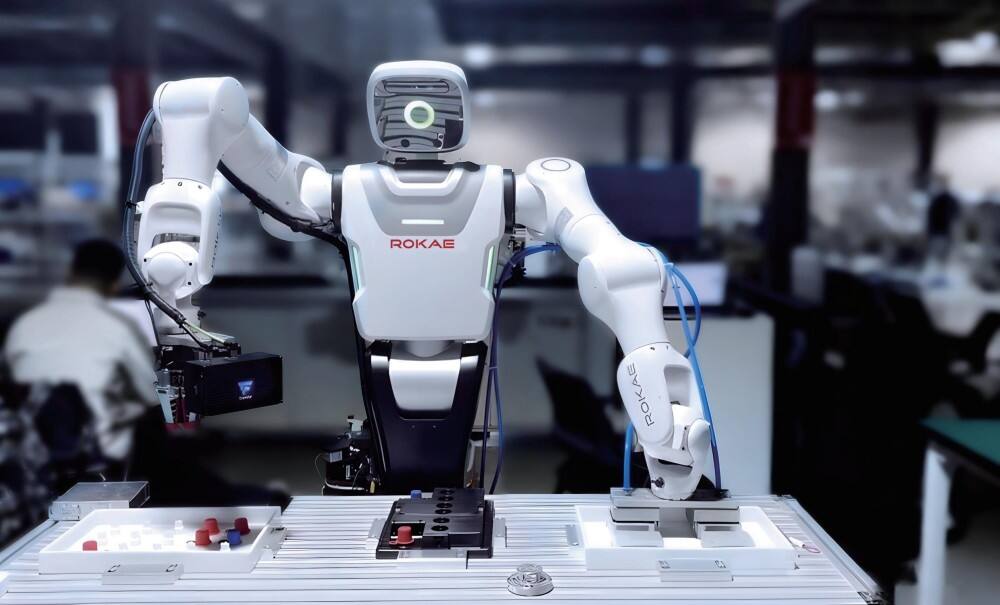
ROKAE Robotics has officially launched two new members of its AR humanoid force-controlled arm series — the AR3 and AR10 — building on the proven foundation of its AR5 platform. The expanded lineup forms a complete product matrix designed to address the growing demand for precise, human-like manipulation in industrial embodied intelligence applications.
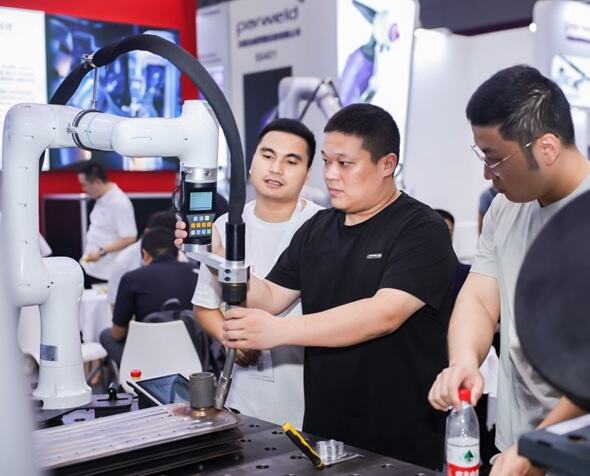
All three models were on display at productronica Shanghai, alongside ROKAE's proprietary HSA integrated force-controlled joint, offering global partners and developers a hands-on look at the company's core component solutions.
A Complete Lineup
The AR series now spans the full range of industrial use cases:
· AR3 — optimized for lightweight service robots, extending the reach of humanoid platforms into consumer and commercial environments
· AR5 — the flagship general-purpose model, capable of handling more than 80% of precision industrial tasks
· AR10 — built for heavy-load handling and demanding assembly operations on the factory floor
Force Control That Replicates Human Touch
At the core of the AR series is what ROKAE describes as a full-chain force control architecture — spanning hardware sensing, algorithmic correction, and motion execution — developed over a decade of work in compliant collaborative robotics.
Key specifications include:
· Force sensing precision of ≤0.15 N and ≤0.05 N·m, enabled by high-precision torque sensors embedded in each joint
· 32 kHz force-controlled sampling paired with impedance control at over 1 kHz, delivering a joint force control loop bandwidth exceeding 100 Hz
· Impedance-based compliant control supporting collision detection, adaptive trajectory adjustment, and safe human-robot interaction without sacrificing positional accuracy
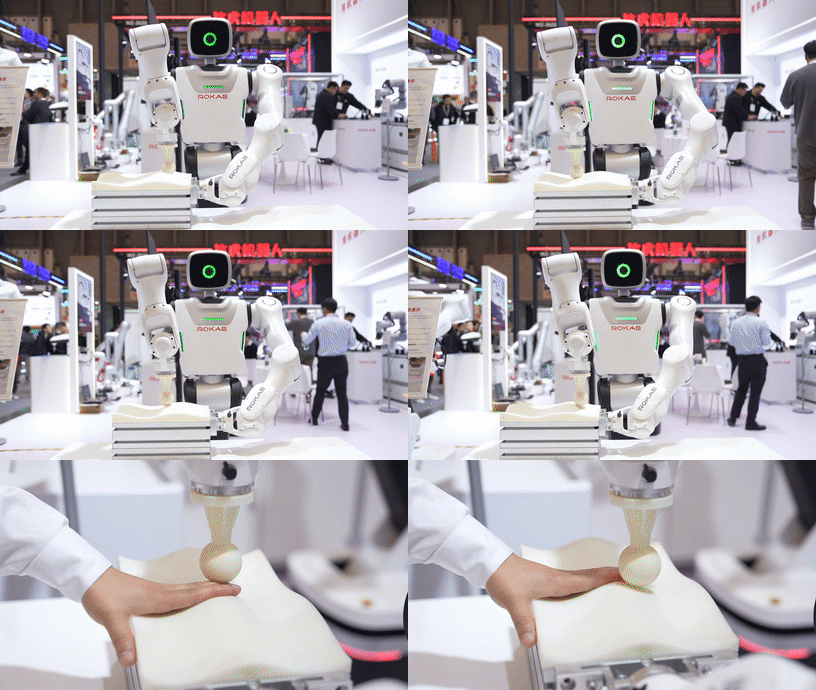
Motion Performance Built for the Factory Floor
The AR series integrates ROKAE's proprietary algorithms for kinematics, dynamics, and vibration suppression. For the hardware, frameless torque motors rated to 6,000 rpm deliver high torque density in a compact form factor. Paired with high-precision harmonic drives, the system achieves a peak torque of 459 N·m and torque density of up to 48 N·m/kg.
Despite a payload-to-weight ratio of 1:2, the arms maintain a repeat positioning accuracy of ±0.1 mm and a maximum TCP speed of 2 m/s — performance benchmarks typically associated with fixed industrial robots.
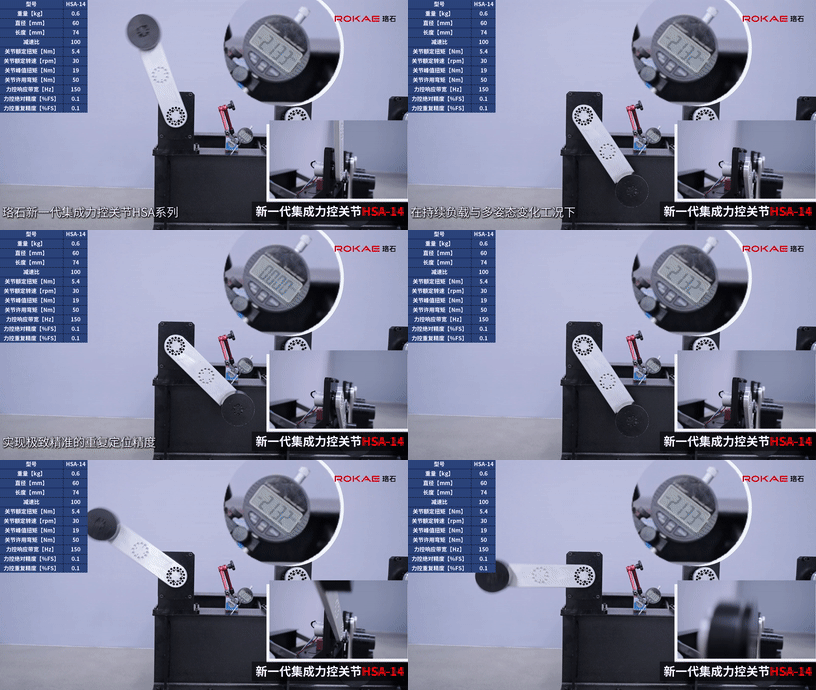
Seven DoF, Human-Scale Dexterity
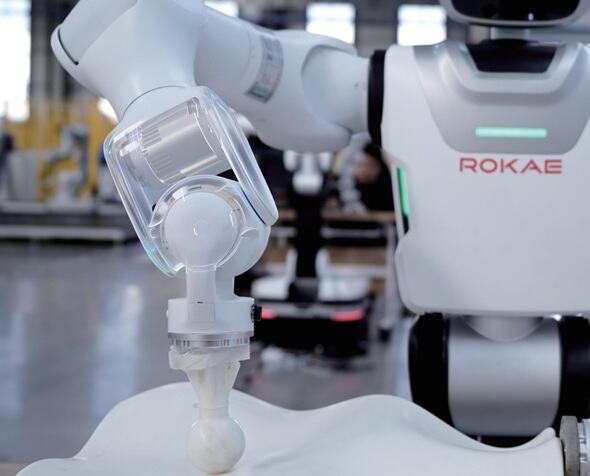
The AR series uses a 7-DOF configuration with a cross-axis wrist design, allowing one-to-one replication of human arm motion. The arms are built around ROKAE's newly developed HSA integrated force-controlled joints, which incorporate lightweight shell — reducing material density by more than 30% compared to traditional designs while maintaining the structural rigidity required for long-term industrial operation.
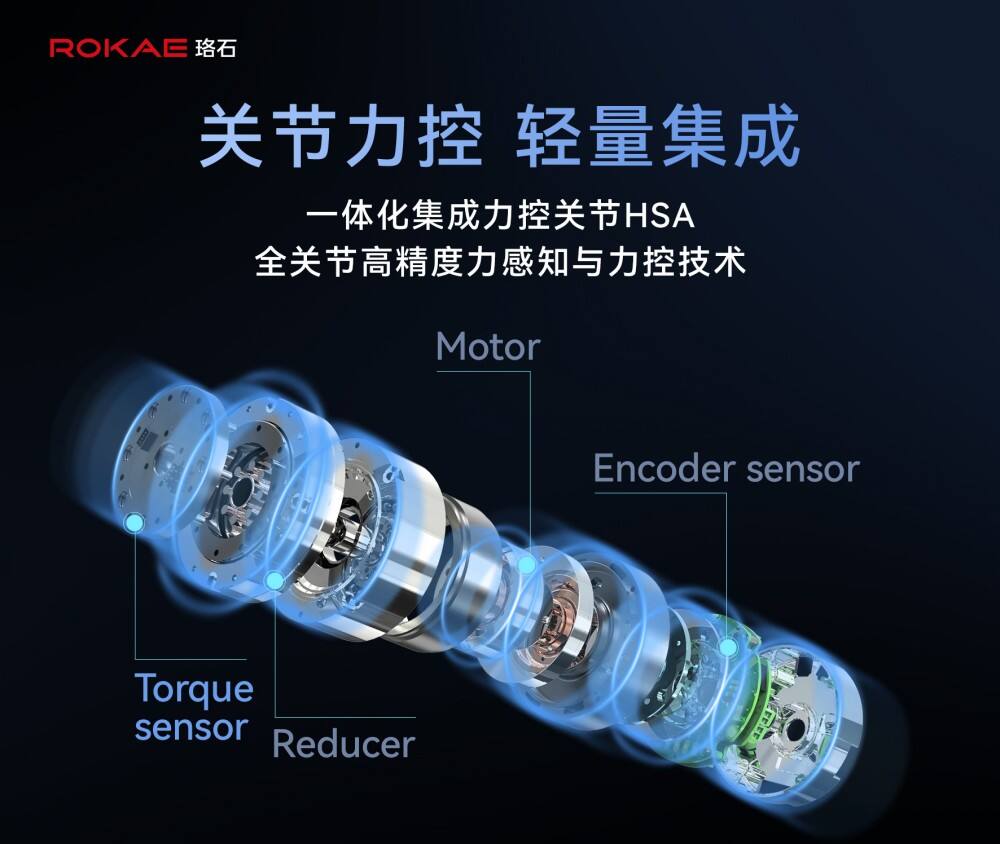
Developer-Ready Out of the Box
The AR arms support EtherCAT, CAN FD, and RS485 protocols, and provide open access to advanced SDK functions including dynamics, kinematics, impedance control, force/position hybrid control, and collision detection. ROS2 compatibility, built-in camera routing, and plug-and-play vision sensor support are included in SDK as standard. Comprehensive documentation and technical support are designed to significantly shorten integration timelines for both humanoid and wheeled robot platforms.
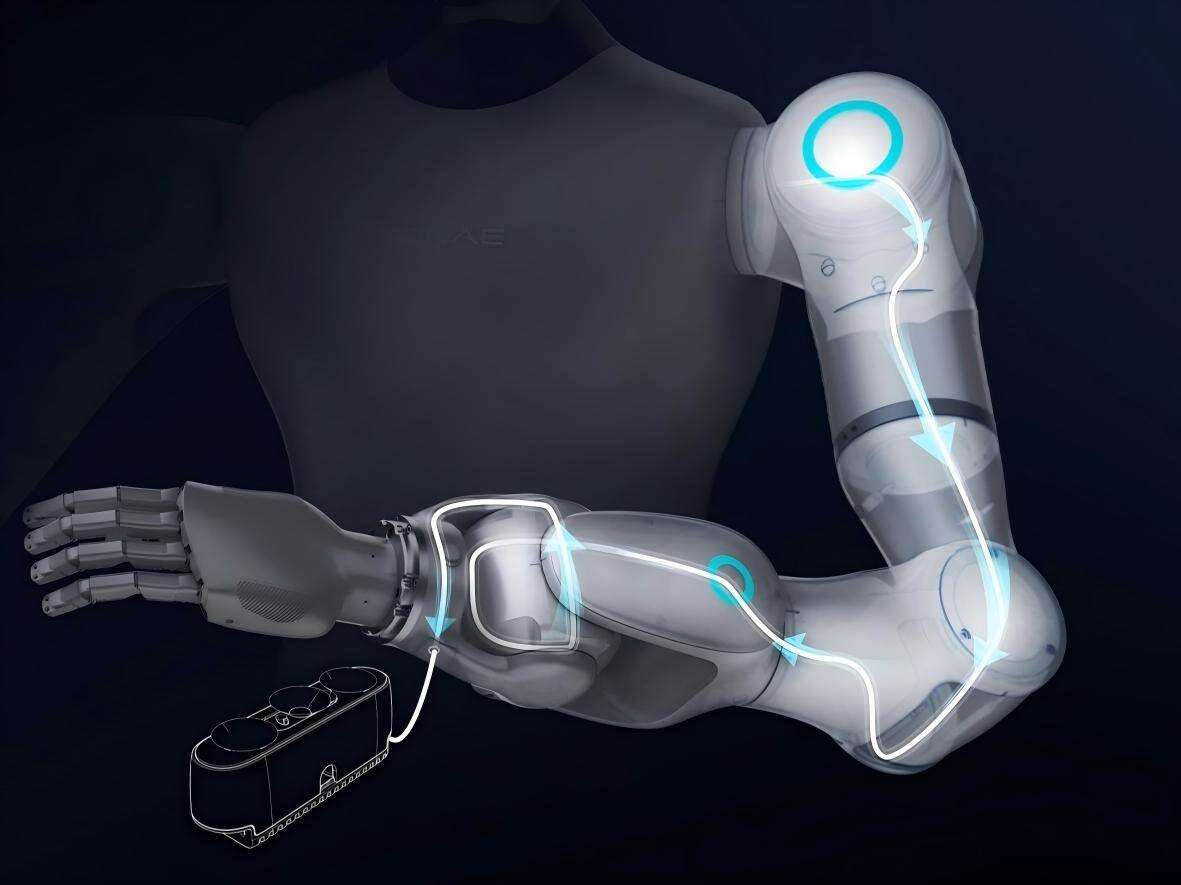
Proven at Scale
ROKAE has shipped more than 3,000 units of the AR series, with deployments across 3C electronics, automotive, and new energy sectors. This track record in volume manufacturing underpins its confidence in offering the AR line as a production-ready solution.
Rather than developing complete robot systems, ROKAE has positioned itself as a core component supplier within the embodied intelligence ecosystem: developing force-controlled arms and joints, and sharing application know-how and process data with partners to accelerate model training and scene adaptation.
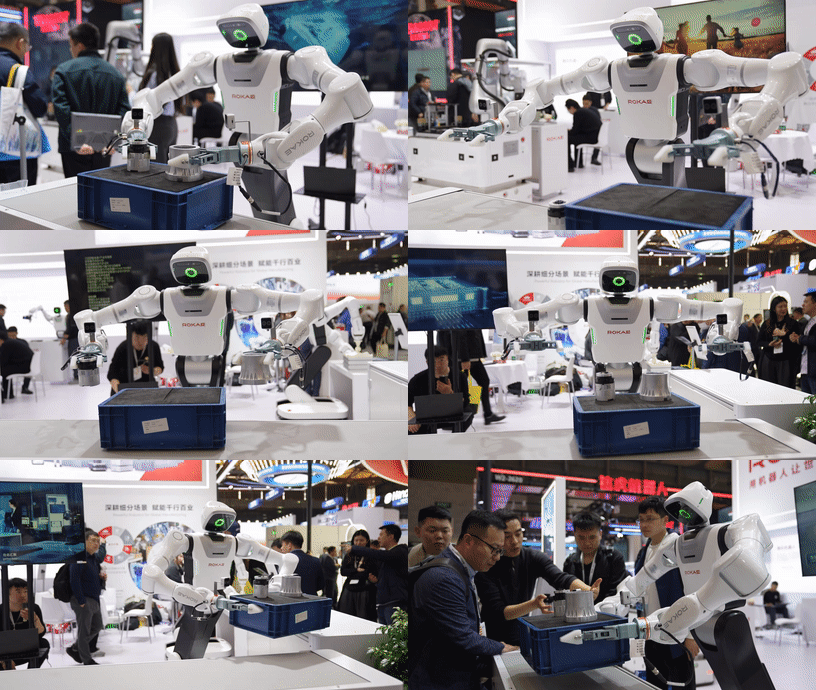
We believe embodied intelligence is not the product of any single algorithm. It requires the co-evolution of brain and body, and a hardware-level understanding of how robots perceive, understand, and interact with the physical world. The AR series is our answer to that challenge.